Zero-Trust Architecture as the Structural Standard for Modern Digital Ecosystems
Insight Overview August 6, 2025
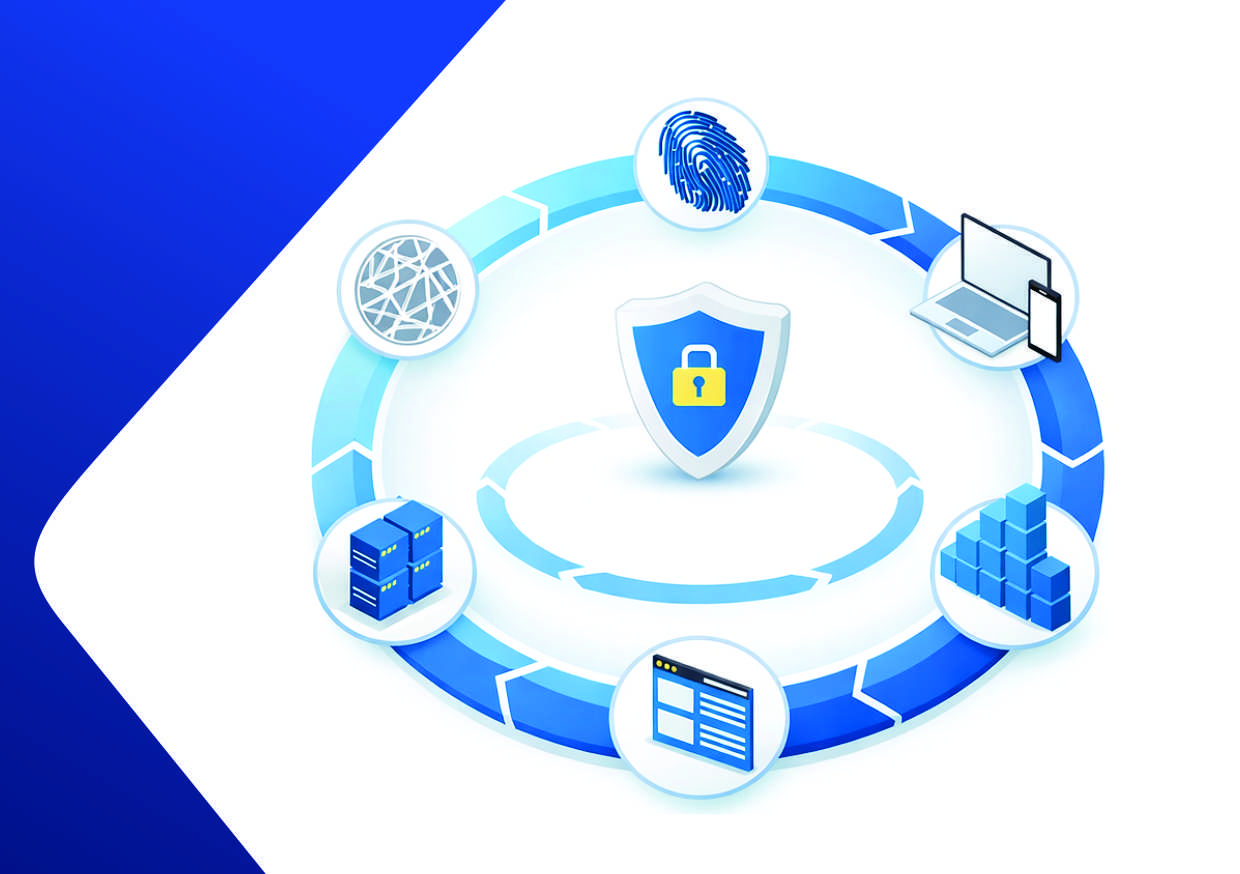
Digital ecosystems have evolved beyond perimeter-based infrastructure. Cloud environments, mobile access, remote workforces, API integrations, and third-party platforms have dissolved traditional network boundaries. In this environment, trust assumptions become structural vulnerabilities.
Zero-trust architecture emerges as the structural standard for modern digital resilience.
The Collapse of Perimeter Security
Traditional cybersecurity models relied on securing the network perimeter while assuming internal actors and systems were inherently trustworthy. This assumption no longer holds in distributed digital environments.
Modern ecosystems require continuous verification across:
- Users
- Devices
- Applications
- Data flows
- Infrastructure components
Trust must be earned at every interaction.
Principles of Zero-Trust Architecture
Zero-trust architecture operates on foundational principles:
- Never trust, always verify
- Enforce least-privilege access
- Authenticate continuously
- Monitor all activity
Identity and access management frameworks, multi-factor authentication systems, encrypted communication protocols, and activity logging mechanisms form the structural backbone of zero-trust environments.
Security as Architectural Layer
Zero-trust cannot function as an overlay. It must be embedded into:
- Application design
- Infrastructure configuration
- Data exchange protocols
- API gateway management
- Endpoint controls
Security integration at architectural level ensures that vulnerabilities are reduced structurally rather than reactively mitigated.
Operational and Regulatory Benefits
Zero-trust frameworks enhance:
- Insider threat mitigation
- Lateral movement prevention
- Audit traceability
- Compliance alignment
- Breach containment
Institutions adopting zero-trust models demonstrate heightened governance maturity and operational resilience.
Security as Structural Discipline
Zero-trust architecture replaces implicit trust with continuous verification. Embedded authentication, access control, and monitoring frameworks transform cybersecurity into structural infrastructure.
Security maturity is achieved when protection mechanisms are integrated into architectural design rather than applied reactively.